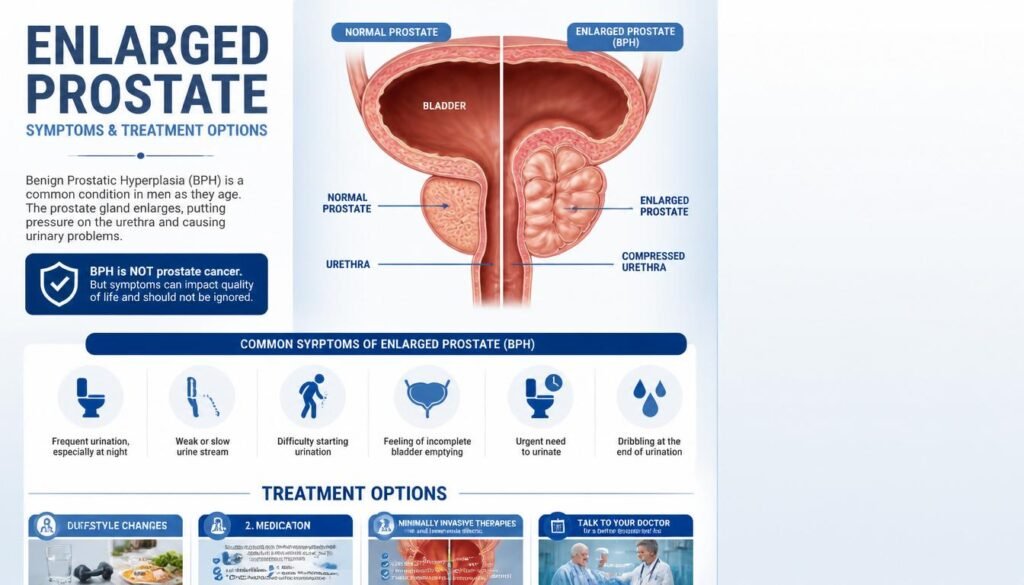


An enlarged prostate is one of the most common health concerns affecting men as they age. Medically known as Benign Prostatic Hyperplasia (BPH), this condition occurs when the prostate gland gradually increases in size, putting pressure on the urethra and making urination more difficult. While the symptoms can be uncomfortable, BPH is a non-cancerous condition and is not the same as prostate cancer.
The prostate is a small gland located below the bladder and in front of the rectum. Its primary role is to produce fluid that nourishes and transports sperm. As men get older, hormonal changes can cause the prostate to grow larger. This growth is considered a normal part of aging, and millions of men worldwide experience some degree of prostate enlargement.
Common Symptoms of an Enlarged Prostate
The symptoms of BPH usually develop gradually and may worsen over time. Common signs include:
- Frequent urination, especially at night
- Difficulty starting urination
- Weak urine stream
- Interrupted urine flow
- Sudden urges to urinate
- Dribbling at the end of urination
- Feeling that the bladder is not completely empty
These symptoms can range from mild to severe and may significantly affect a man’s quality of life if left untreated.
What Causes an Enlarged Prostate?
Although researchers do not fully understand the exact cause of BPH, aging and hormonal changes are believed to be the primary factors. As men grow older, shifts in testosterone and other hormone levels can stimulate prostate growth.
Several risk factors may increase the likelihood of developing an enlarged prostate:
- Age over 50
- Family history of prostate problems
- Obesity
- Lack of physical activity
- Type 2 diabetes
- Heart disease
While these factors do not guarantee that a man will develop BPH, they may contribute to an increased risk.
Is an Enlarged Prostate the Same as Prostate Cancer?
No. Benign Prostatic Hyperplasia is not cancer and does not directly cause prostate cancer. However, both conditions can produce similar urinary symptoms. Because of this overlap, regular medical checkups are important for proper diagnosis and early detection of any prostate-related issues.
If you experience persistent urinary symptoms, consulting a healthcare professional is essential to determine the underlying cause.
How Is BPH Diagnosed?
Doctors typically diagnose an enlarged prostate through a combination of medical history, symptom evaluation, and physical examination. Additional tests may include:
- Prostate-Specific Antigen (PSA) blood test
- Urinalysis
- Ultrasound imaging
- Urinary flow studies
- Bladder function tests
These evaluations help healthcare providers determine the severity of the condition and recommend the most appropriate treatment plan.

Treatment Options for Enlarged Prostate
Treatment depends on the severity of symptoms and the impact they have on daily life. Common approaches include:
Lifestyle Changes
Men with mild symptoms may benefit from:
- Reducing caffeine and alcohol consumption
- Limiting fluid intake before bedtime
- Maintaining a healthy weight
- Exercising regularly
- Practicing bladder training techniques
Medications
Several prescription medications can help relax prostate muscles or reduce prostate size, improving urinary flow and symptom control.
Surgical Procedures
In more advanced cases, minimally invasive treatments or surgery may be recommended to remove excess prostate tissue and restore normal urinary function.
Supporting Prostate Health Naturally
In addition to conventional medical treatments, many men explore natural approaches to support prostate health. A healthy diet rich in vegetables, fruits, healthy fats, and antioxidants may contribute to overall prostate wellness.
Some men also choose specialized prostate-support supplements formulated with natural ingredients commonly associated with urinary and prostate health. One popular option is:
ProstaStream
This supplement is designed to support normal prostate function, promote healthy urinary flow, and help maintain overall prostate wellness as men age. You can learn more by visiting the official website:
As with any dietary supplement, it should be used as part of a broader health strategy and should not replace professional medical advice or treatment.
Tips for Maintaining a Healthy Prostate
To support long-term prostate health, consider the following habits:
- Stay physically active
- Maintain a healthy body weight
- Eat a balanced, nutrient-rich diet
- Avoid smoking
- Manage blood sugar levels
- Schedule regular medical checkups
- Address urinary symptoms early
These simple lifestyle choices may help support urinary function and overall well-being throughout the aging process.
Final Thoughts
An enlarged prostate is a common condition that affects many men, particularly after the age of 50. Although it is not cancerous, it can cause bothersome urinary symptoms that interfere with daily life.
Understanding the symptoms, risk factors, and treatment options can help men take proactive steps toward better prostate health. Combined with regular medical care, healthy lifestyle choices, and appropriate nutritional support, it is possible to manage symptoms effectively and maintain a high quality of life.